September 20, 2026
If you never clean your solar panels, you are agreeing to two things. You are agreeing to less power every day, and you are agreeing to a system that wears out sooner than it should.
Here is how much you lose, why it happens, and how to time a cleaning so you are not paying for one you do not need.
You are giving up 20 to 30 percent of your production
That is the realistic range for an uncleaned system, and it can run higher depending on the conditions your panels sit in.
Central Valley summer dust is harsh. A 30 percent gain after a cleaning is a reasonable result here, not an exceptional one. Put another way, you paid for a full solar system and you are running 70 to 80 percent of it.
The loss is quiet. Nothing breaks and no alarm goes off. The bill just creeps up and the system gets the blame.
Cheaper systems take a bigger hit
The equipment on your roof changes how much dirt costs you, and that means the panels and the inverter together.
Top quality panels paired with a premium system are designed to hold up in harsher conditions and hotter climates, and they tolerate soiling better. A budget system under the same layer of dust loses noticeably more.
If your system was sold on price, cleaning matters more for you, not less.
Dirt shortens the life of the system
Lost production comes back the day the panels are cleaned. Damage does not.
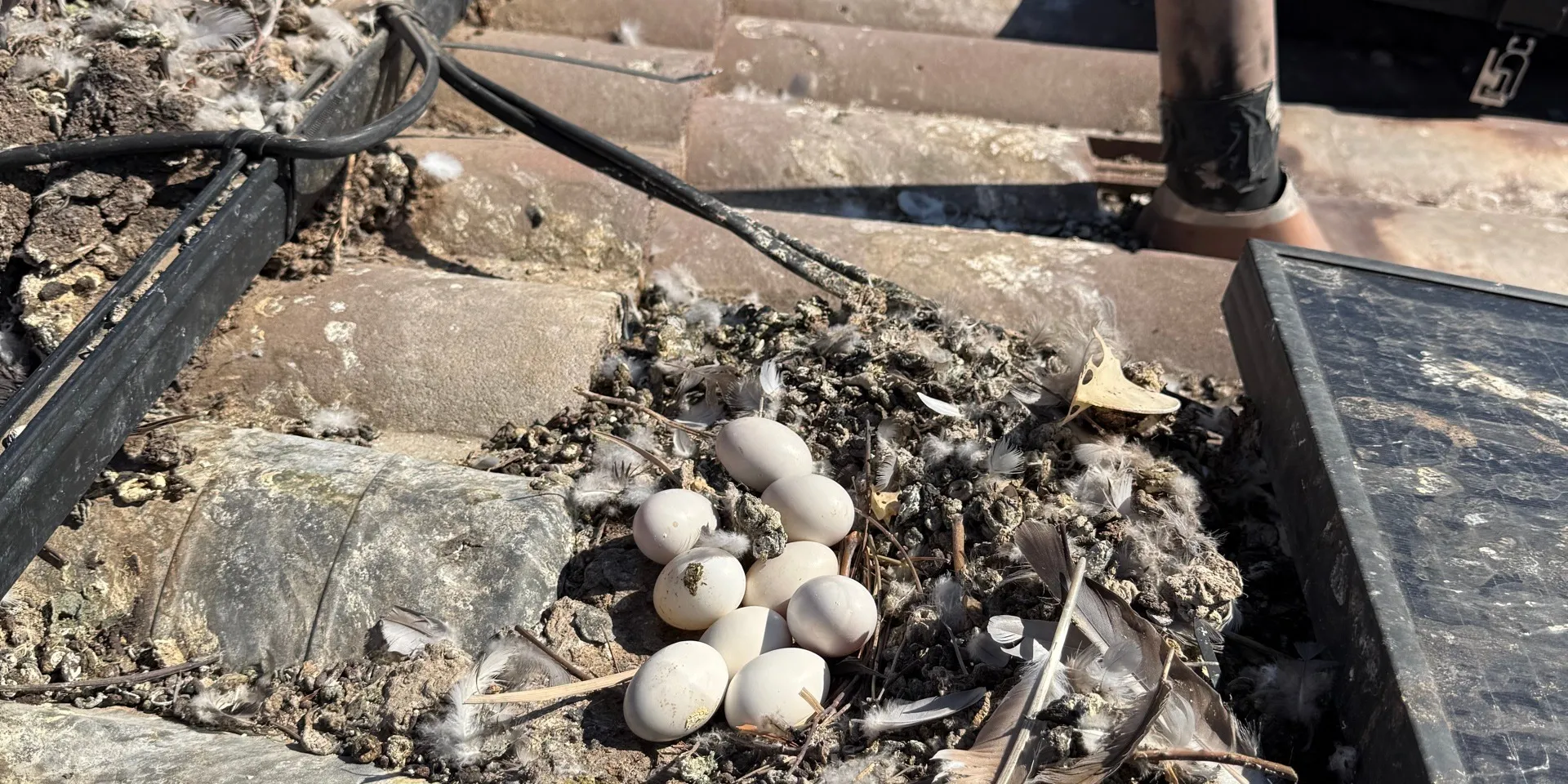
Different contaminants cause different problems when they sit on the glass for long stretches. Bird droppings are the clearest example. A dropping blocks part of a cell, that cell overheats, and you get a hot spot. Leave it long enough and the cell burns out. Once that happens the panel produces less permanently, and no cleaning brings it back.
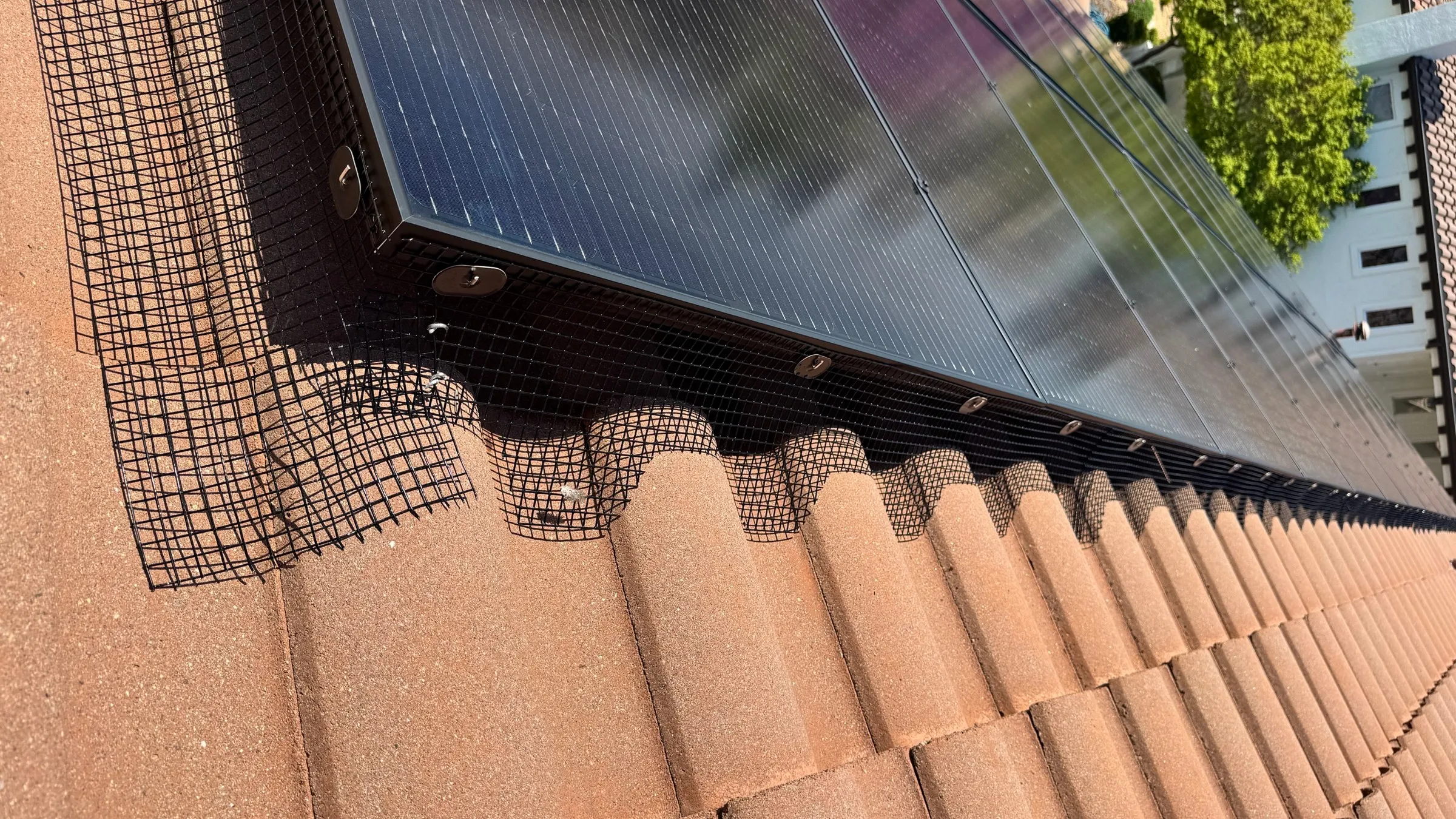
This is why a bird problem is never only a mess problem. If pigeons are living under your array, solar bird proofing protects the panels themselves.
Your manufacturer and your solar company already say this
Solar panel manufacturers recommend cleaning their own product. It is in the maintenance guidance for a reason.
You will also hear it the moment you complain. Call your leasing company, your PPA provider or your installer about low production, and the first thing they usually tell you is to get the panels cleaned.
Where you live decides how much it matters
Location is a huge factor, both in how often panels need cleaning and in how much a dirty array is holding your production back.
In the Central Valley it is essential. We recommend twice a year at minimum, weighted toward summer, for three reasons that stack on top of each other:
- Hot weather. Panels already lose some efficiency in extreme heat, so soiling lands on a system that is working at its hardest.
- A dusty climate. Dry months, farm activity and no rain to knock anything loose.
- Expensive energy. Summer is when rates peak, so every lost kilowatt-hour costs the most.
Clean on a strategy, not on looks
This is where most homeowners get it wrong. They look up, see dust, and assume the panels should always be spotless.
Solar panels are not a luxury sports car. They are strong, durable energy production machines, and a bit of dust is normal for normal production.
We think about it in layers. One layer of buildup is not worth a service call, and we would rather you did not book one. The goal is to catch the panels when several harsh layers have built up, clean them then, and reset the maintenance clock.
Timed that way, each cleaning recovers the most production and does the most to prevent long-term damage.
Does rain clean solar panels?
Not well. A hard enough rain will take off a few layers of dirt. It will not remove the harshest buildup, which is the part actually dragging your production down.
Even so, our rule of thumb for homeowners is to skip professional cleaning during the low-light, rainy months. Production is lower then regardless, and the buildup is not at its worst. Save the cleaning for the dry season, when it pays.
Commercial sites are the exception
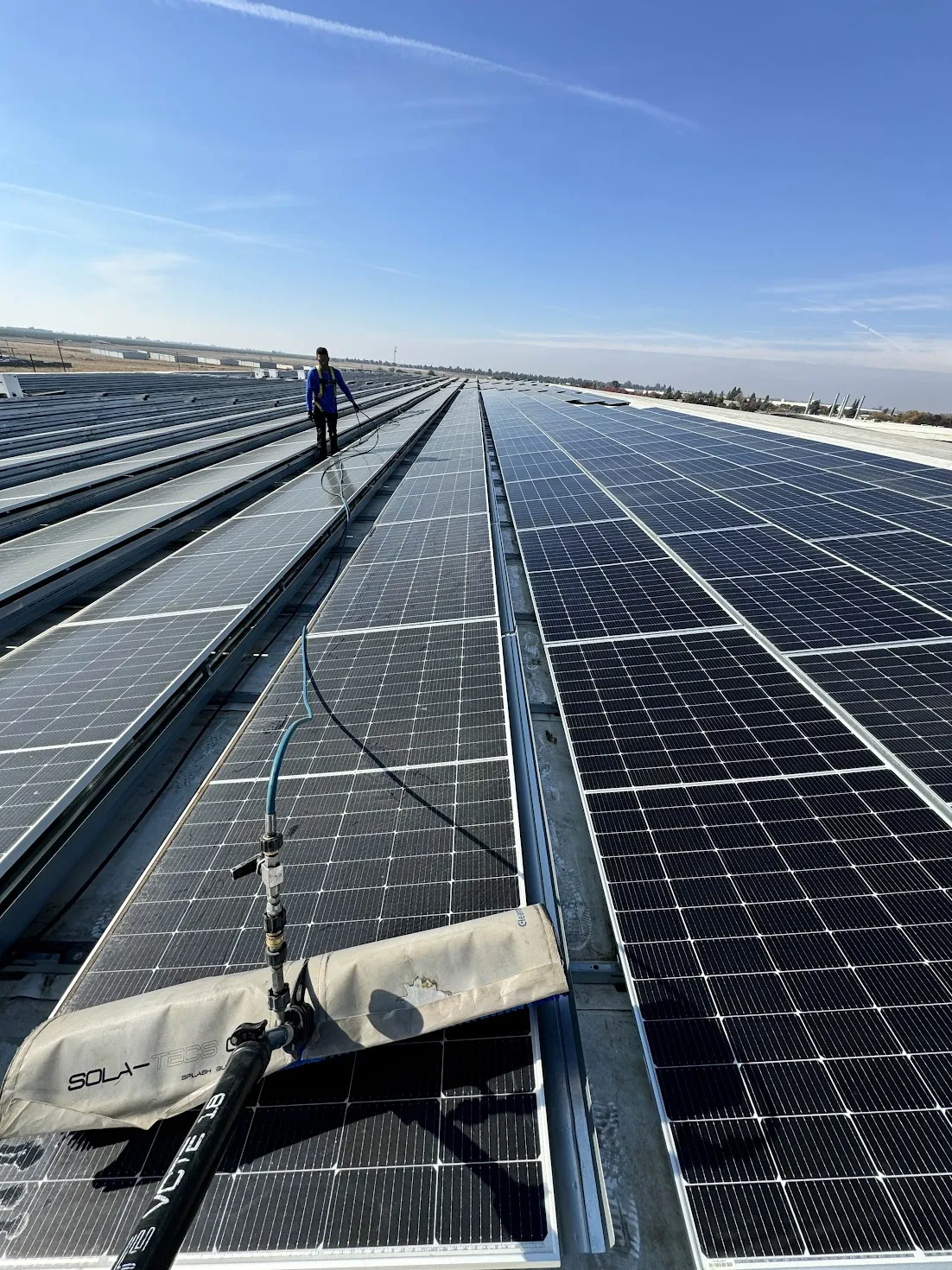
If you run a commercial property with solar, disregard that last rule. Commercial sites usually deal with far harsher conditions and need maintenance year round, typically three to four times a year. See commercial solar panel cleaning for how that works.
Find out what a cleaning costs
Our solar panel cleaning cost calculator gives you a real price in seconds, and our guide to solar panel cleaning costs explains how the pricing works.
When you are ready, book a solar panel cleaning and we will time it to the season that gets you the most back.